I build AI products, agent infrastructure, and developer tools.
I’m Min Liu, a software engineer in BC, Canada, with 12+ years in machine learning and software systems — currently Technical Lead, AI Engineer at Actual Voice. Before that I was a Staff Software Engineer at Alibaba, where I led the algorithm team whose systems managed a billion-dollar-scale ad budget for about 4 million daily active users. For agent projects, I measure correctness, latency, cost, and failure handling.
Work
AI Products
General-purpose agents, voice feedback, equipment support, and CAD applications built with models and tools.
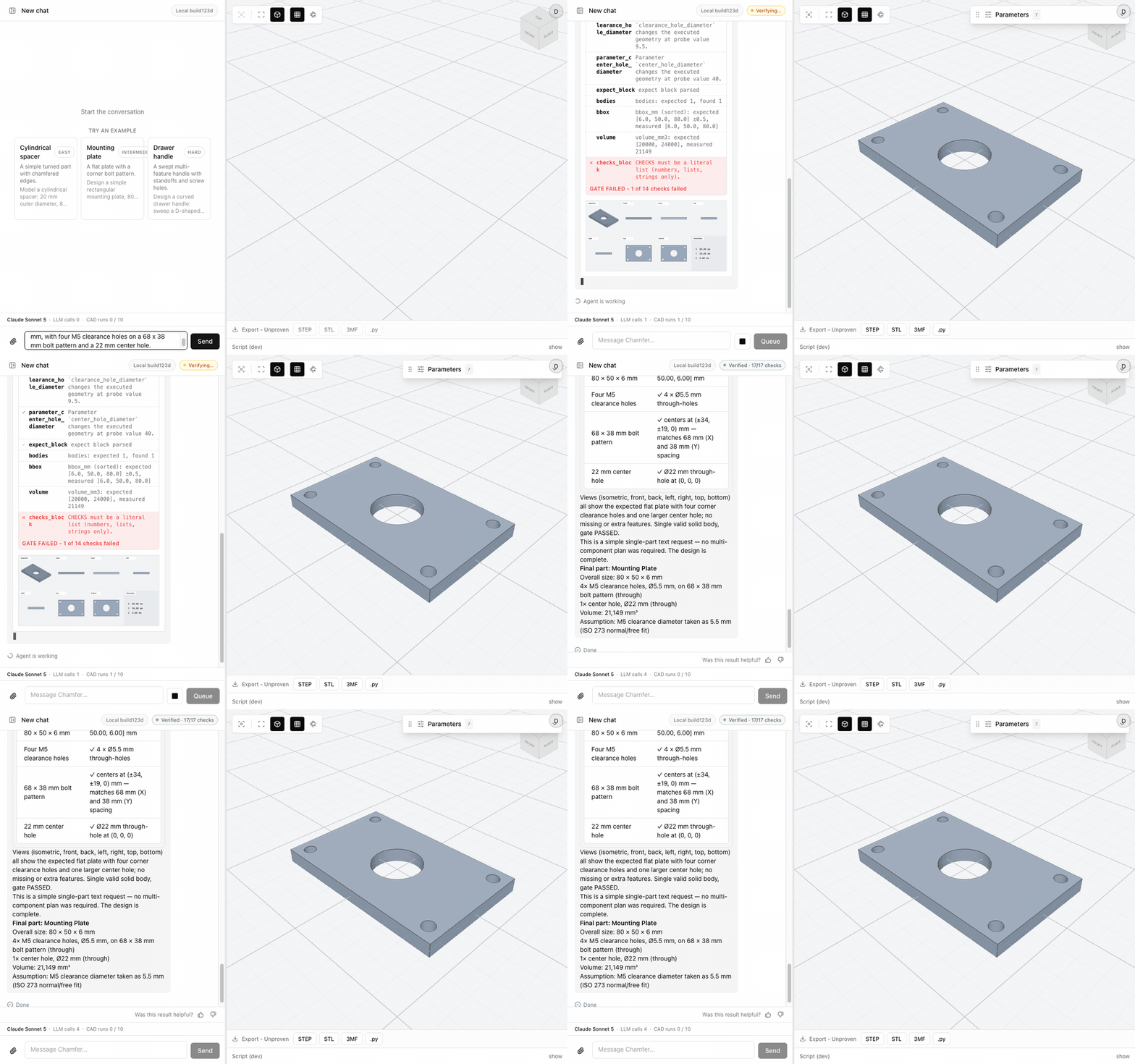
Chamfer2026
AI CAD Agent
Chamfer creates parametric CAD models from a text prompt or reference image, checks dimensions and features, and exports the result for CAD or fabrication workflows.
Cloudflare Workers, Durable Objects, Cloudflare Containers, build123d, MCP
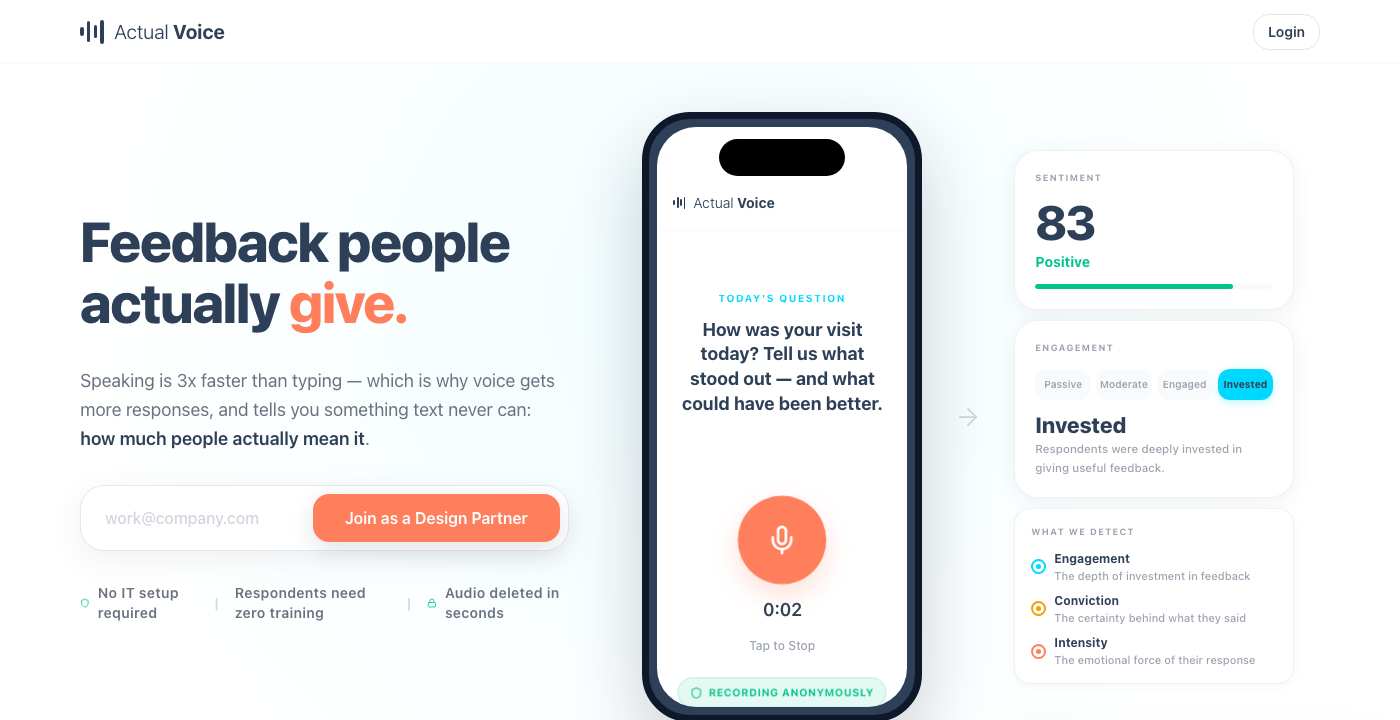
Actual Voice2025–26
Voice Feedback
Actual Voice collects open-ended spoken feedback and produces group-level themes, engagement signals, and summaries while keeping raw individual responses out of aggregate reports.
Supabase, PostgreSQL, Edge Functions, Whisper, LLM pipelines
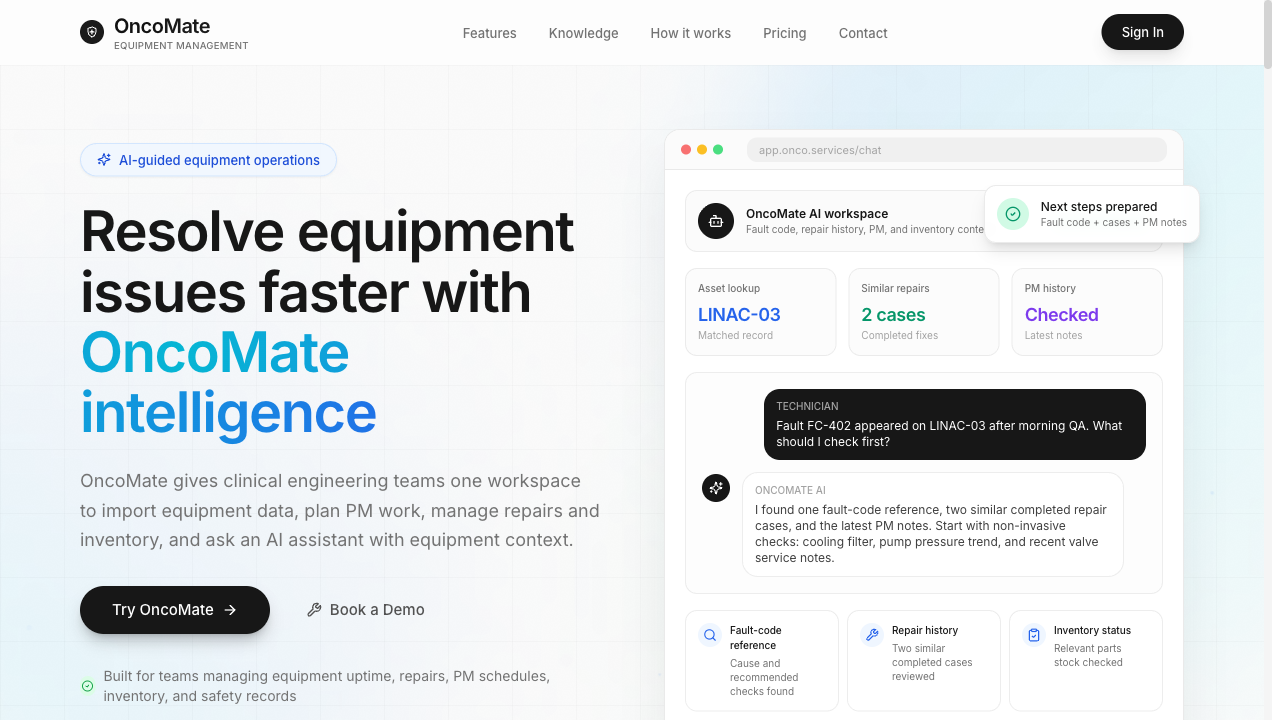
OncoMate2025
Equipment Troubleshooting
OncoMate helps oncology equipment teams investigate faults using the specific machine record, fault-code and treatment references, completed repairs, preventive-maintenance notes, and parts inventory.
pgvector, Hybrid search, OpenAI embeddings, Supabase, Tool calling
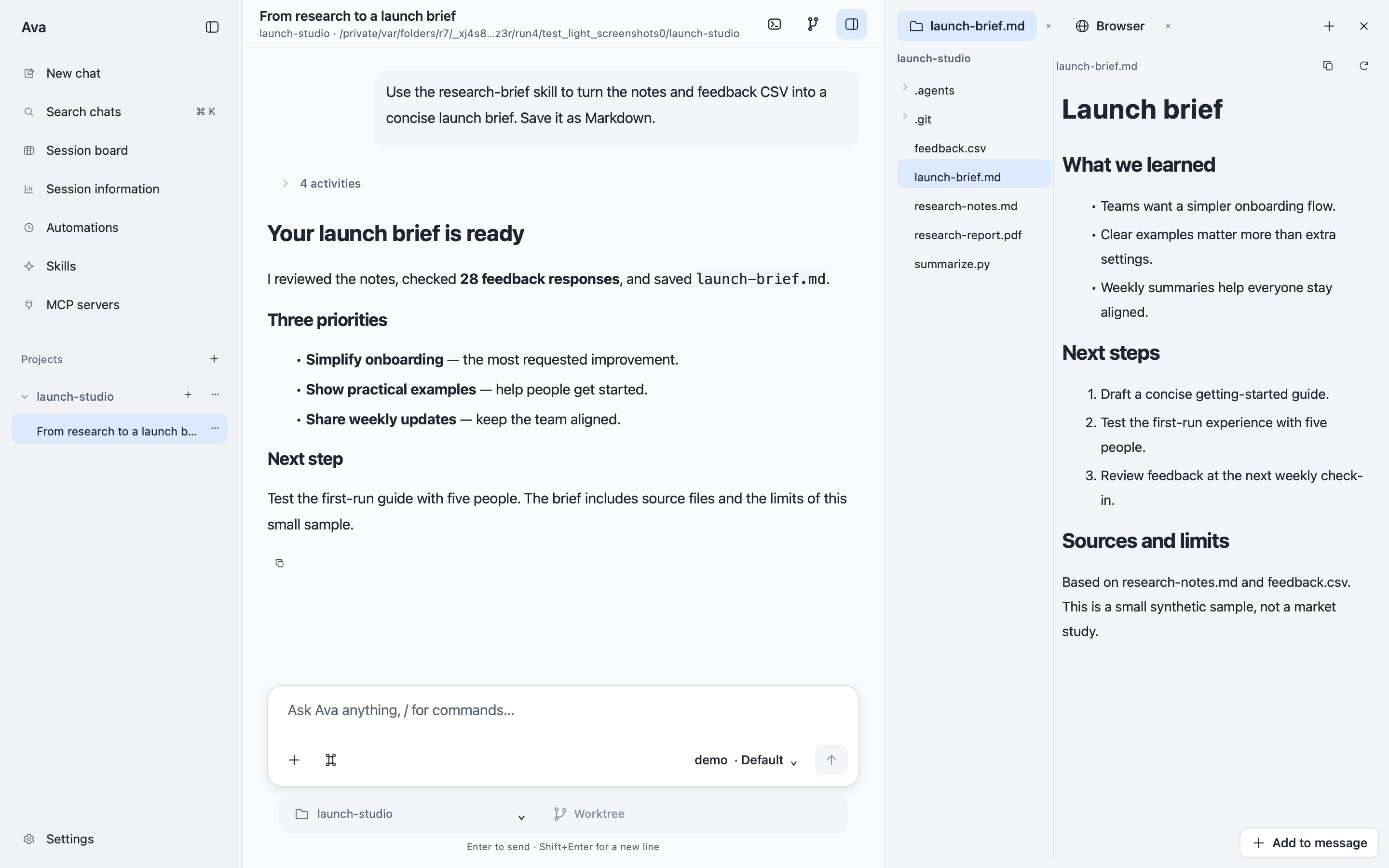
Ava2026
AI Agent Workbench
Ava works with your files, browser, and tools to research, write, analyze data, automate recurring tasks, and build software.
Python, Podman sandbox, Qt / QML, FastAPI, MCP
Developer Tools
C++ tools for compiler inspection and structured-text processing.
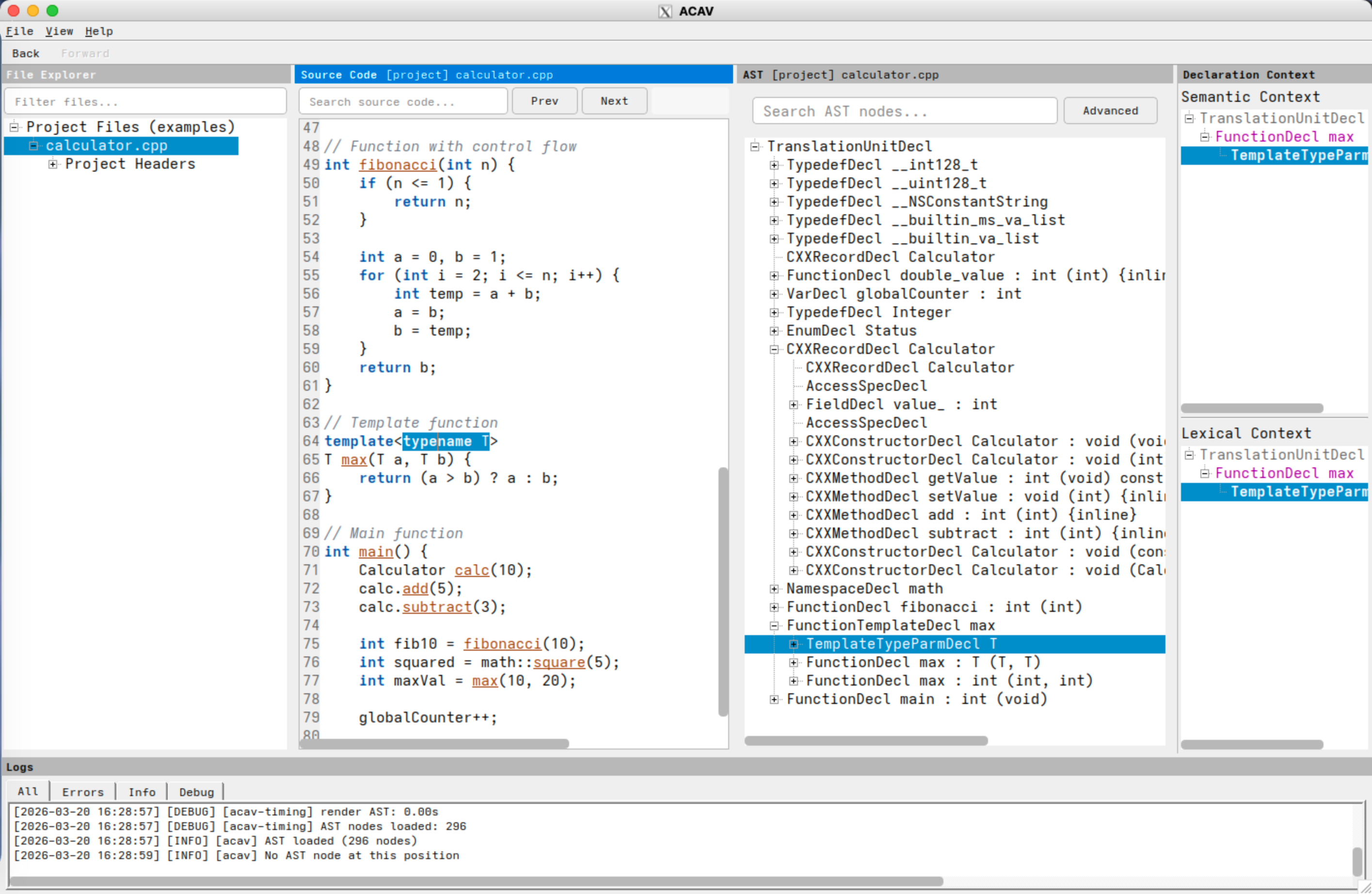
ACAV2024–26
Compiler Tooling
ACAV shows C++ source, Clang AST nodes, declaration context, comments, and diagnostics in one C++/Qt desktop application.
C++, Qt 6, QML, Clang APIs, LLVM
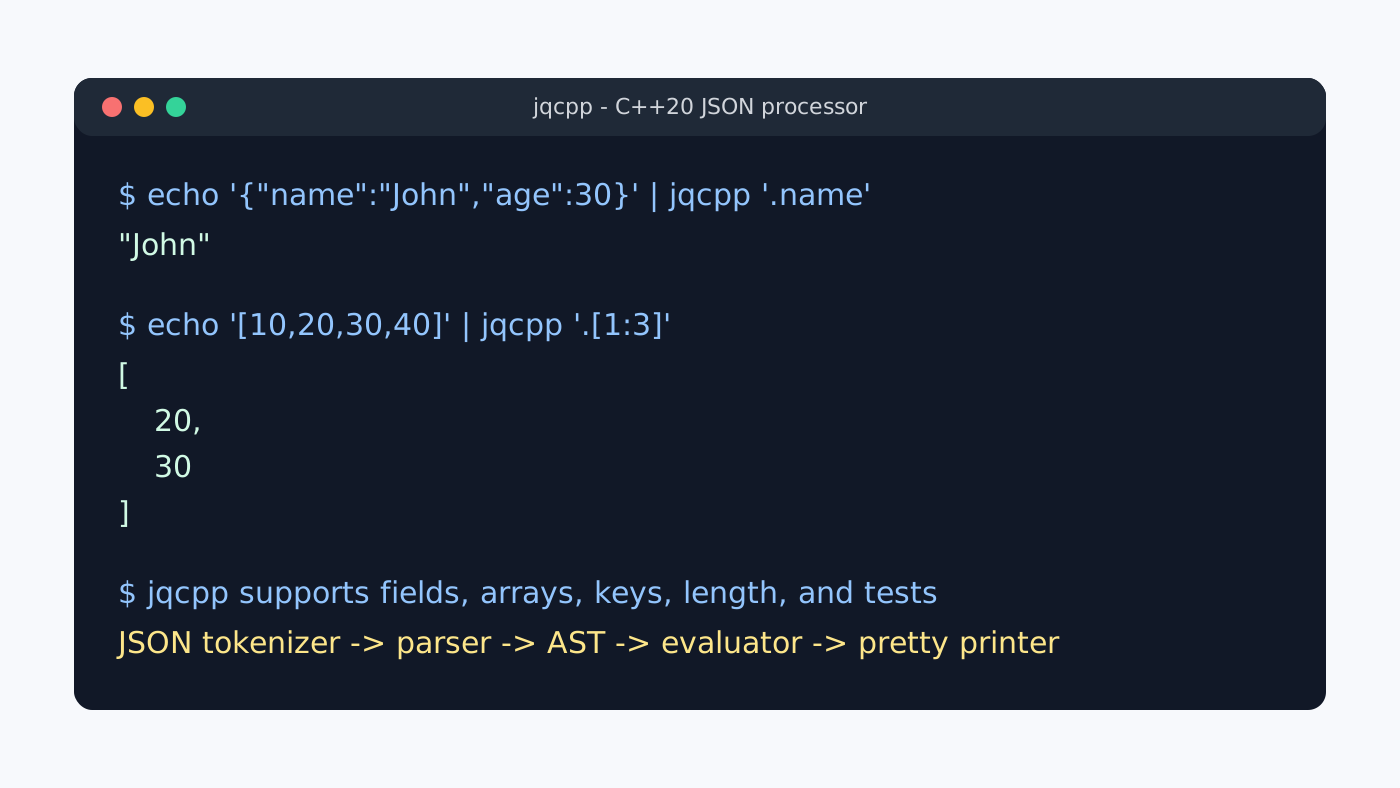
jqcpp2026
C++ CLI Tool
jqcpp is a C++20 command-line tool for selecting fields, array items, slices, keys, and calculated values from JSON input.
C++20, CMake, Lexer / parser, AST evaluation, Catch2
Experience
I have built software close to hardware, model-backed services used across international markets, document-processing systems, and AI products from database to interface. I now focus on agent infrastructure, evaluation, backend engineering, and C++ developer tools.
Actual Voice Inc
2025 – presentTechnical Lead, AI Engineer
Lead the AI engineering of a voice-feedback analytics product in production.
Details
Built a multi-stage LLM pipeline (PII redaction, moderation, analysis) on async queues with retries and schema validation; the evaluation loop with labeled cases, LLM-as-judge, blind human review, and Langfuse tracing; and an OAuth MCP server so customers query insights from their own agents.
Medura Solution
2024 – 2025Senior Software Engineer
Built OncoMate, the equipment-troubleshooting agent above, now in production at 3 organizations.
Details
Designed the hybrid-retrieval and evaluation loops and the multi-tenant data isolation described in the case study.
University of Victoria · independent products
2023 – 2026MEng, Computer Engineering
Built ACAV, an open-source Clang AST viewer, alongside the degree, and independently built Chamfer and Ava.
Details
Chamfer and Ava include their own evaluation harnesses and an engineering agent that now opens most of their pull requests.
Alibaba Group
2017 – 2023Staff Software Engineer (2019–2023) · Senior Software Engineer (2017–2019)
Led the algorithm team; campaign automation managed a billion-dollar-scale annual ad budget for about 4 million daily active users across 20+ countries.
Details
Campaign automation across Google, Facebook, and DSPs cut acquisition cost by double digits over manual campaigns (A/B tested). Built a real-time coupon decision API serving millions of requests a day and owned 13B-parameter LLM inference on vLLM for translation and ad copy. Earlier built a contract-intelligence platform processing about 1 million contracts a year, raising review efficiency by 50%, with patents on its extraction infrastructure.
Dahua Technology
2011 – 2016Computer Vision Engineer
Built a production image-processing algorithm library — dehazing, super-resolution, denoising, traffic and face recognition — under DSP/ARM constraints.
Tools I use most: Python, C++, TypeScript, LLM agents, evaluation, Clang/LLVM, PostgreSQL, Qt/QML, observability.
Contact
Based in BC, Canada. Reach me by email or on LinkedIn.